
I’m Mark. I run Vent Busters in the Greensboro area, and this site is servBin: a place where I write about service work, software, and what it actually costs to run a small company when you care about systems.
If you want the straight biography, the Vent Busters About page has the timeline: appliances since I was a kid, hardware store, sales and service, then years running operations for other companies. This post is the longer version of the part the About page doesn’t have room for.
I spent a long stretch in a niche I didn’t plan on but turned out to fit me. Medium and large appliance service outfits were still on paper invoices and fax machines well into the mid-2000s. I ran day-to-day operations, but I also pushed the work into the present: mobile-ready fleets, tablets in techs’ hands with updates while they’re still in the customer’s house, automated warranty claims with manufacturers like Whirlpool, integrations with ServiceBench and other warranty portals. Not theory. Deadlines, trucks, and angry customers if the data’s wrong.
That work taught me how a service company actually moves from call to cash.
In 2017 I started my own business, Vent Busters. That’s when I sat on the other side of the same systems I’d been installing for years. The software worked. The cost was the shock.
I wanted the full package: a real WordPress site, customer-facing pieces, online booking, review management, social posting, bookkeeping, CRM, scheduling, reminders, phone, marketing, maintenance tracking, hosting, payments. Each piece had a monthly or yearly tab. Individually a lot of them look reasonable. Together they don’t.
Here’s the part that still annoys me. I’m one owner-operator, but I kept hitting plan walls. Want something basic like a Zapier hook or a “real” integration? That’s not on the cheap tier. So I paid for heavier business plans packed with features I didn’t use, just to unlock a few I needed.
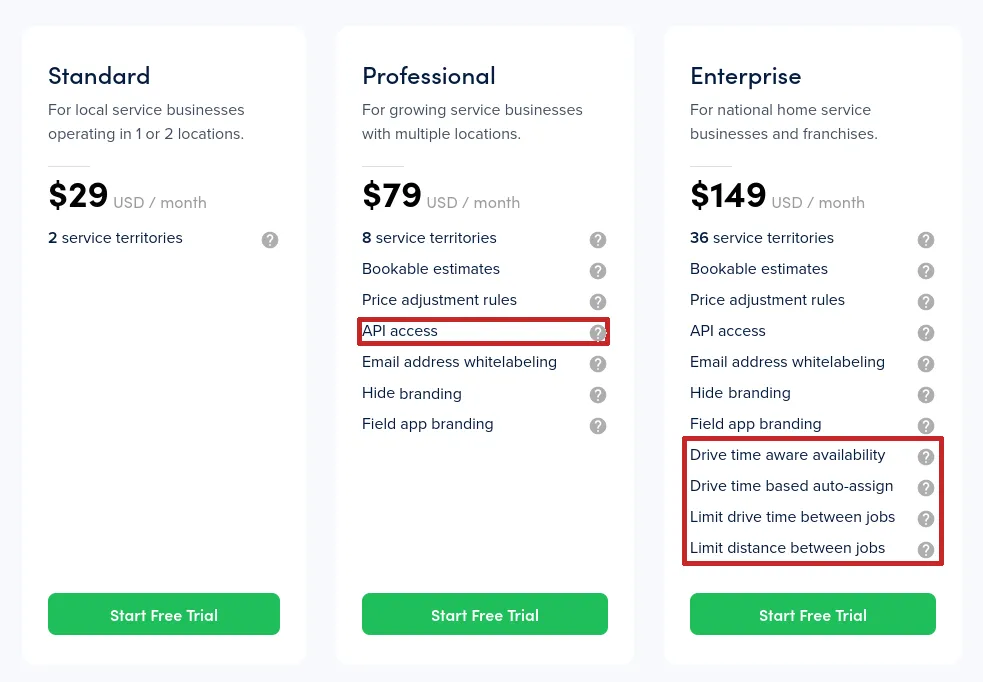
Mailing lists are the example I use when I explain this to other owners. I use Constant Contact mostly for light-touch reminders to a list I built over years. The pricing model cares about how many contacts you store, not how many emails you send. So I paid like a heavy sender when I wasn’t one. Longevity in business became a line item.
None of that is a knock on any single vendor. It’s the stack. When everything is subscription-shaped, the bill grows even when your headcount doesn’t.
On paper I had what I wanted: a back office that ran from taking the call through to getting payment details to my accountant with minimal babysitting. Put a tech in a truck and the middle was handled. In practice I was spending well over $1,000 per month on software and some painfully priced WordPress plugins. Something had to change.
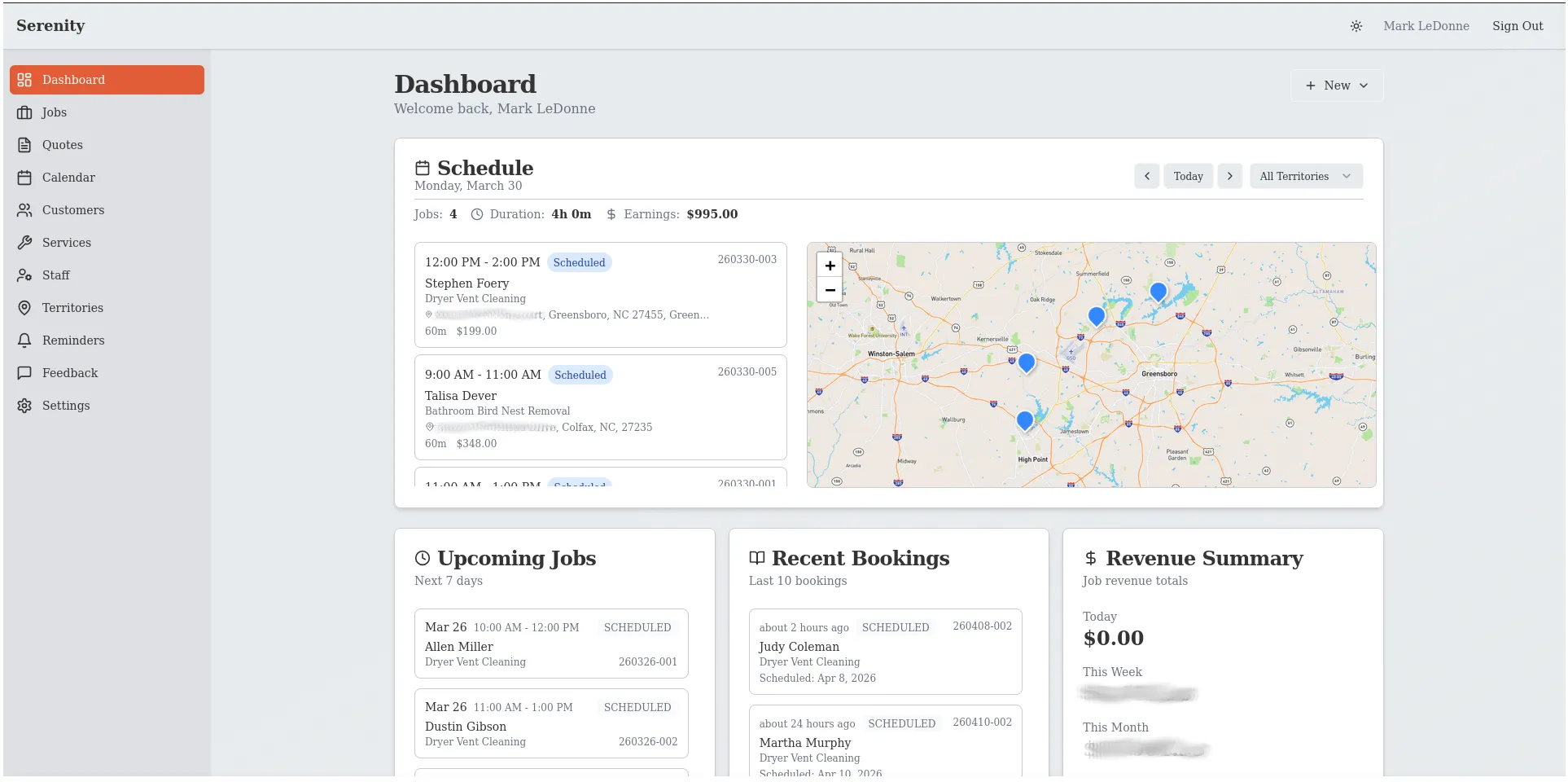
I started replacing pieces with things I built in-house. As I got better at coding and at running systems, I went further: my own scheduling platform (Serenity) with online booking and territory logic that does what I used to pay big CRMs for. I’ll write about that here, not in one breath in an intro post.
In 2025 I finished moving off Google and the big cloud providers for how I run my own infrastructure. That journey has its own posts: what I gained, what broke, what I’d do differently. The headline for this one is simple: I’m not paying rent on someone else’s defaults anymore, and I’m not shaping Vent Busters around software written who-knows-where for who-knows-who.
What servBin is for
I’m publishing here because talking only to myself in the garage got old. I want to share what I’ve learned running service operations and building tools for a real company with real trucks and real reviews, not slide decks.
You’ll see posts about scheduling and self-hosting, cutting SaaS spend, warranty and field-service integrations, and lessons from the field—topics I actually live with, not theory. Sometimes I’ll show something I built. I’m also looking for consulting work with other owners and ops people who are tired of the subscription pile and want a saner setup. I’m not selling a product; I’m documenting what I did.
If that sounds like your world, use the Hire page to reach out and tell me what you’re up against. If you’re just here for the rants about pricing tiers, that’s fine too.
Thanks for reading the introduction. The next posts get more technical.
Comments (0)
Loading comments...
Leave a Comment